

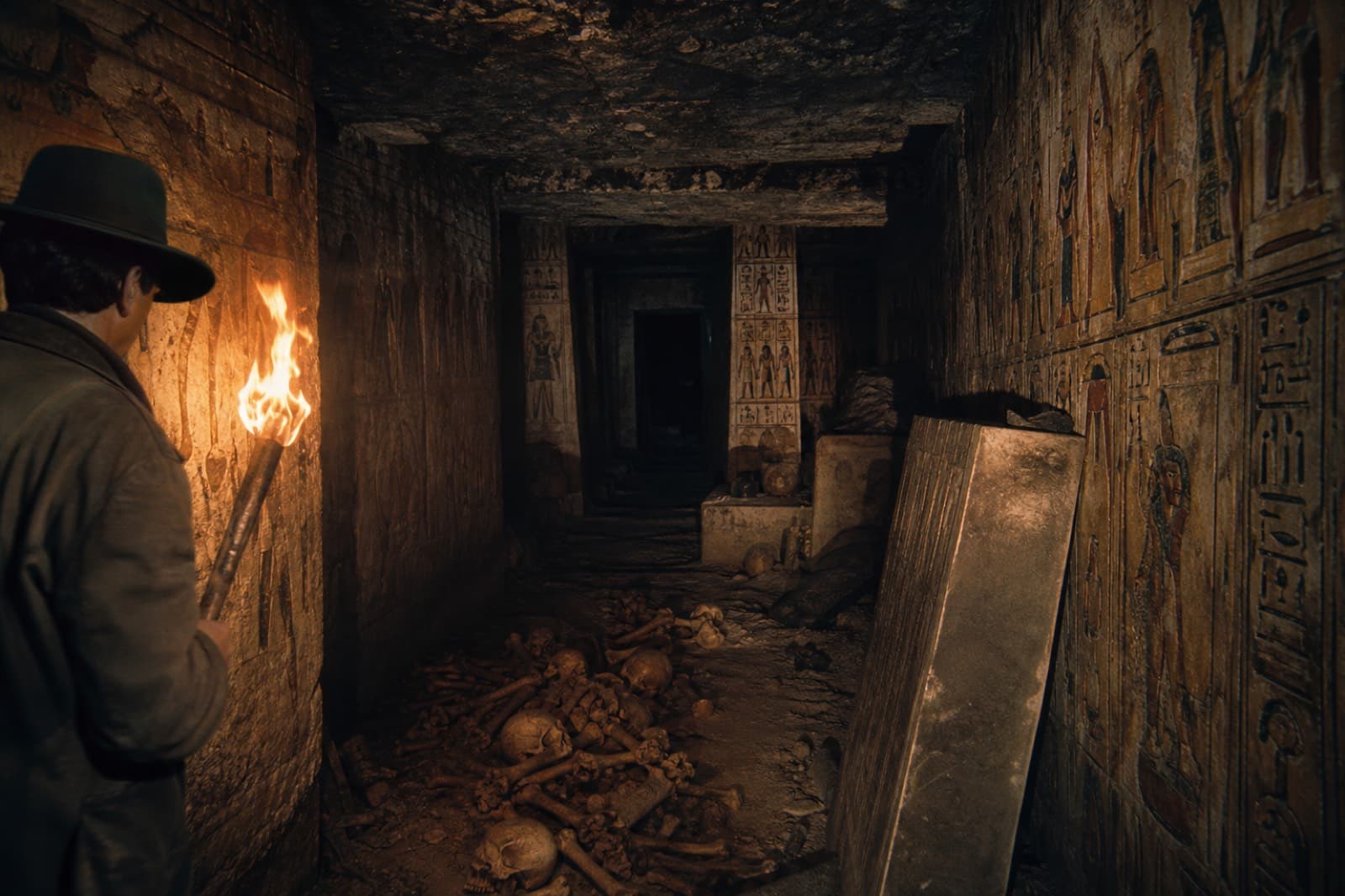
Imprisoned with the Pharaohs
Under the Pyramids - 1924
Harry Houdini's alleged descent beneath Giza leads to a labyrinth of bones and a vast unseen eater in darkness - ghost-written for the escape artist, yet soaked in genuine claustrophobia.
I felt that I was imprisoned in the tomb of a Pharaoh.
Houdini narrative voice
Overview
Credited to Harry Houdini and written by Lovecraft for publicity, the tale nonetheless records a coherent underworld: false passages, ritual chambers, and a presence that feeds without chewing. Tourist guides deny the route; believers map it beneath the Sphinx.
Whether Houdini truly fell into a pit during a 1910 tour is disputed. That something in the dark breathed is not disputed by those who have read the file and later refused night shifts in Cairo museums.
Narrative Record
Drugged by guides, the narrator wakes in a stone corridor lined with kings whose names were never Greek. He crawls, falls, and reaches a cavern where a cyclopean mass shifts without fully showing itself - hunger as weather. He escapes when torchlight and human voices breach the fiction of solitude.
The ending restores showmanship: Houdini survives because escape is his trade. The middle does not feel like showmanship. It feels like testimony.
Witnesses & Aftermath
Egyptian authorities issued no comment. Lovecraft's fee was small; the imagery reappears in Nyarlathotep and Under the Pyramids correspondence.
Treat authorship as collaborative; treat physiology of the eater as unknown species or metaphor at reader risk.
Archive Notes
Do not contract 'authentic' tomb tours. If knocked unconscious in a foreign city, assume relocation underground until proven otherwise. Houdini's bravado is not a field protocol.
Citation: Miskatonic Expedition Archive. Record STY-157. Access subject to institutional review.
Related Records
Cross-References
OG-003
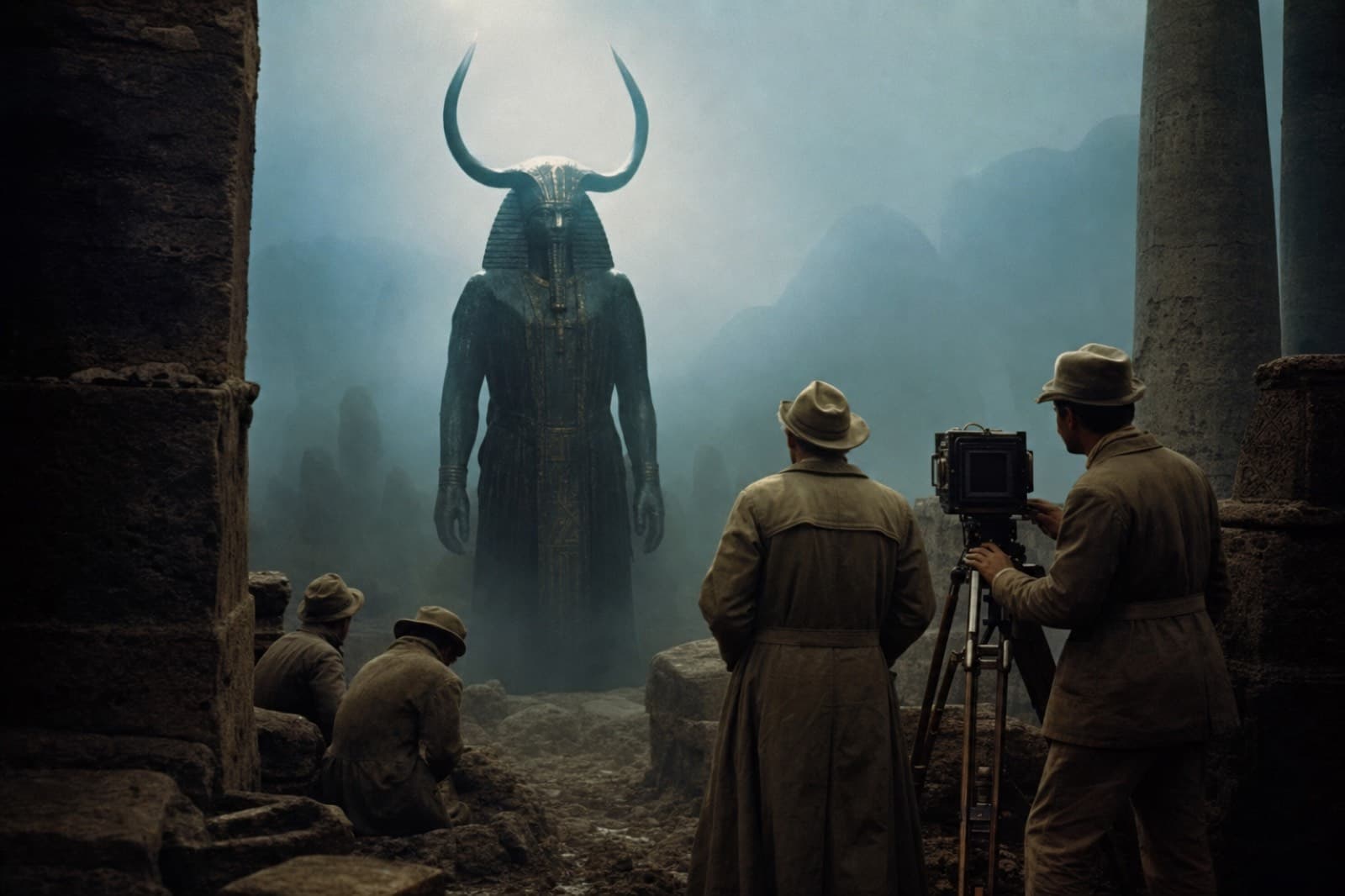
activeNyarlathotep
The Crawling Chaos
A protean messenger who walks among humanity in countless guises, sowing madness and progress alike, the one Outer God who seems to enjoy our suffering.

TOM-001
fragmentaryNecronomicon
Al Azif, Book of Dead Names
The most infamous grimoire of the mythos, an Arabic manuscript of rituals, histories, and formulae that erode the sanity of readers and have never been wholly suppressed, only scattered.
CON-002
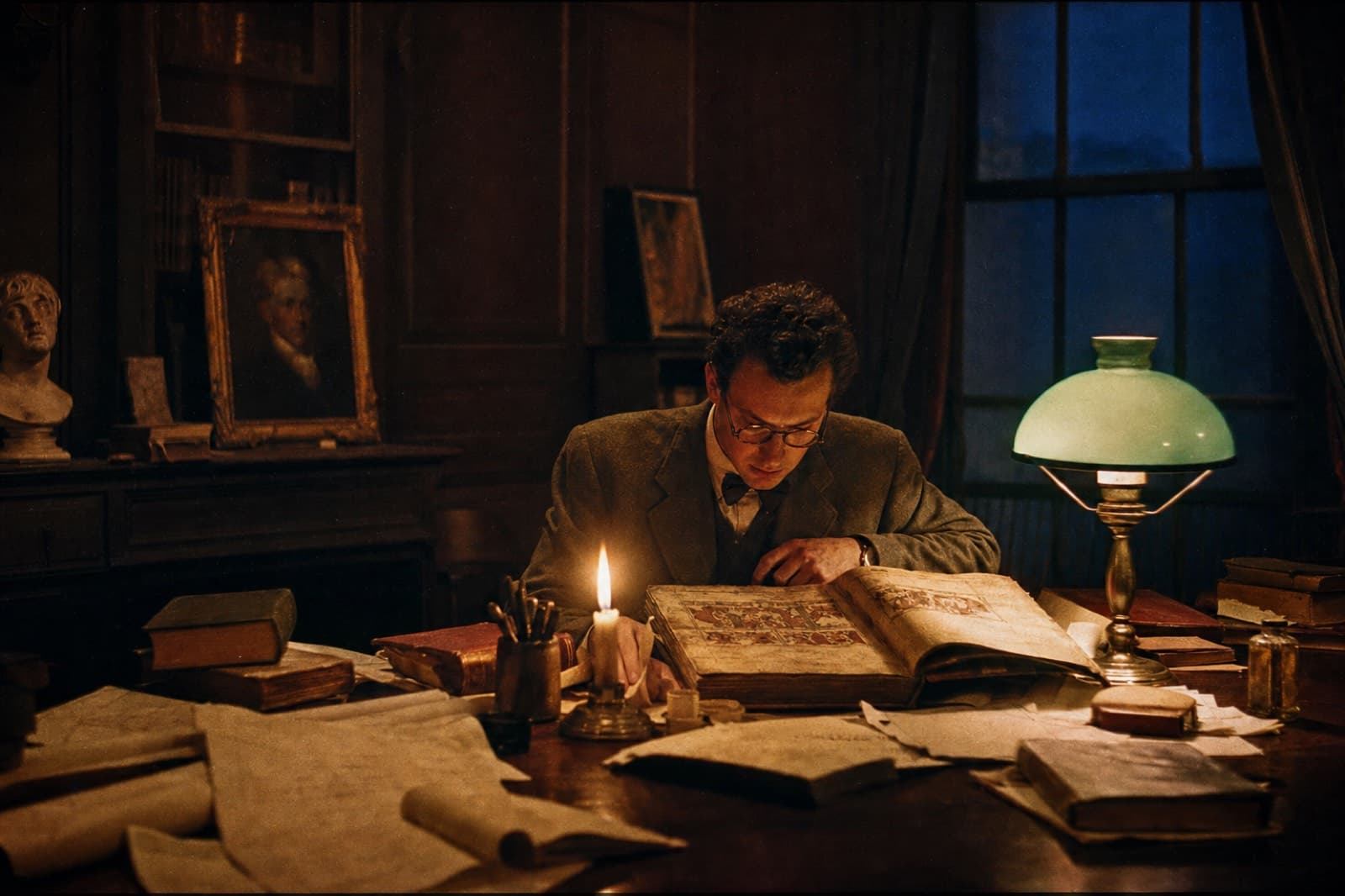
activeForbidden Knowledge
Epistemic Hazard
Information whose acquisition damages the seeker - truths the mind evolved specifically not to accommodate, and that no degree of education prepares one to survive.