
Field Dispatch
Pickman's Model - Art, Richard Upton Pickman & Meaning
Art forensics file - gallery incident North End.
Story summary (spoiler box)
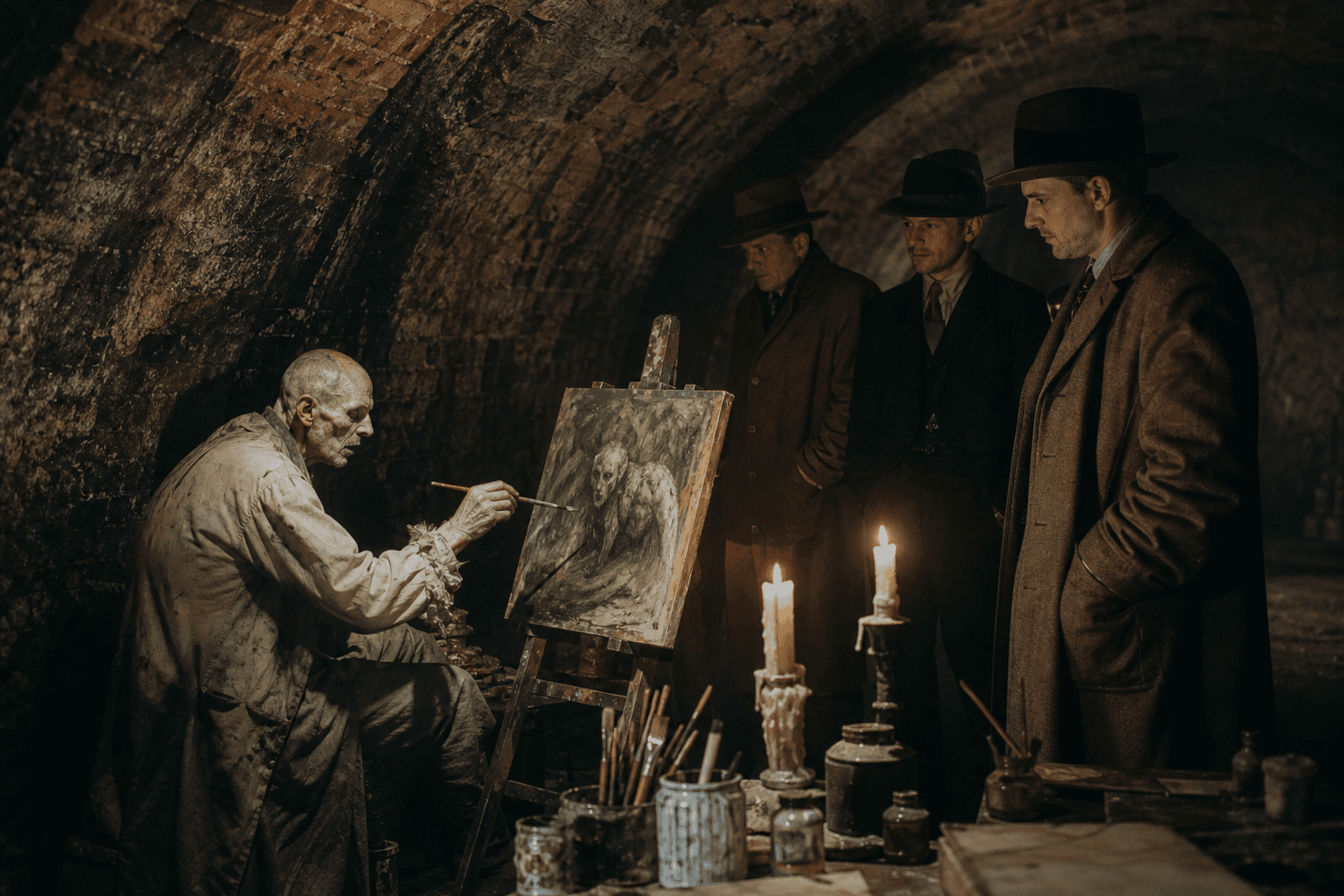
Pickman's Model (1927) follows Boston narrator Thurber's friendship with painter Richard Upton Pickman, whose early portraits show gothic skill and whose later work depicts anatomies too accurate to be invention. The story's revelation recontextualizes the North End's cellars, Salem Street atmosphere, and the boundary between human and ghoul communities - horror arrives not as a tentacled god but as representation that accuses the viewer of complicity.
Story structure without replacing the archive
Lovecraft builds dread through patronage, class anxiety, and refusal to believe until belief becomes unbearable. Thurber is a respectable witness; Pickman is a conduit who understands his subject matter. The full plot, character list, and citation-ready summary live in /archive/pickmans-model - consult that dossier for spoilers, cross-links to ghouls, and publication context before teaching or adapting.
Why realism becomes accusation
The tale endures in art-history conversations because it asks what happens when mimesis crosses an ethical line: when every tendon and tooth in a canvas implies field research underground. Unlike mythos stories that begin with a Necronomicon quote, Pickman's Model begins in a gallery refusal - Boston Brahmins will not hang work that tells the truth about what lives beneath their streets. That scale - human conduit, not Great Old One - makes the story a perfect bridge from /cthulhu-mythos to standalone New England gothic.
Reading path and related archive records
Read Pickman's Model after The Call of Cthulhu if you want mythos names first; read it before The Shadow over Innsmouth if you want urban claustrophobia without maritime genetics. Pair with /archive/arkham for how Arkham narrators talk about Boston, and with our Where to Start dispatch for tiered syllabi. The archive remains plot authority; this dispatch explains why the story persists in criticism and fan culture.
Thurber as respectable witness
Thurber's social credibility is the story's engine: he can vouch for Pickman's talent long after others refuse patronage, which makes the final cellar betrayal a breach of friendship as much as fear. Lovecraft uses that bond to ask what we owe artists whose sources we do not want to know - questions that surface in every forbidden exhibition trope downstream.
Spoiler discipline for instructors
Teach plot beats from /archive/pickmans-model while using this dispatch for theme; students who only read summaries often think the tale is gore-forward when it is epistemology-forward - what happens when evidence cannot be disbelieved. Link to /cthulhu-mythos only after defining ghoul lore as underworld geography, not random monsters.
Boston cellars and Dream Cycle bridges
After Pickman's Model, assign The Dream-Quest of Unknown Kadath (/archive/the-dream-quest-of-unknown-kadath) when you want ghoul communities reframed as travel allies rather than cellar predators. The tonal whiplash is intentional: Lovecraft shows underworld geography can host sympathy and revulsion in the same career. pickman's model syllabi should list Boston and Arkham dossiers side by side so narrators' institutional escapes do not get mistaken for mythos summons alone.
Gallery space as narrative engine
Lovecraft stages horror in refusal - canvases withdrawn, patrons whispering, Thurber still defending talent. Pickman's Model is about who may see before it is about what lives below; assign a short exhibition review from text before opening /archive/pickmans-model for cellar spoilers.
Richard Upton Pickman
Richard Upton Pickman is Lovecraft's most discussed painter - arrogant, talented, and socially radioactive in Boston art circles that prefer monsters to remain symbolic. He channels underground truth into gallery-unshowable work, and unlike many Lovecraft narrators he is not a passive victim of coincidence: Pickman knows what he paints, which shifts horror onto Thurber's refusal to believe until the final cellar descent.
Character study: class, patronage, and contempt
Pickman embodies Brahmin anxiety about who may depict the city's underbelly. His name echoes historical Boston artists enough to feel documentary while remaining fiction - a technique Lovecraft used across Arkham-country tales. The character is not a mythos god; he is a human interface between respectable society and ghoul ecology, which refreshes scale after stories that begin with Cthulhu cults.
Geography: North End cellars and Salem Street
Boston's North End supplies cellar logic, Salem Street atmosphere, and a maze of tunnels where Thurber's rationalism fails. Archive record /archive/pickmans-model maps story beats to those spaces; our Arkham, Massachusetts dispatch explains how Arkham functions as administrative center while Boston handles Pickman's urban horror. Cross-read when you are building a regional syllabus.
Pickman in RPGs, film, and fan galleries
Game masters reuse Pickman as NPC artist, quest giver, or missing person because the trope is portable: too realistic monster art. Treat fan galleries and meme images as commentary, not canon - primary text and /archive/pickmans-model govern plot. For mythos readers, note where ghoul lore later connects to Dream Cycle underworld travel; /cthulhu-mythos links entities without flattening Pickman into a cultist caricature.
Pickman and the Boston Brahmin gallery
Pickman's contempt for viewers who want safe horror mirrors Lovecraft's pulp arguments about atmosphere versus shock. The painter does not hide that his work is true; he hides where truth was sketched. That distinction keeps the character modern in debates about documentary photography, war art, and AI-generated hyperreal violence - domains this dispatch names only to show why the 1927 story still circulates.
Keywords that route to the archive
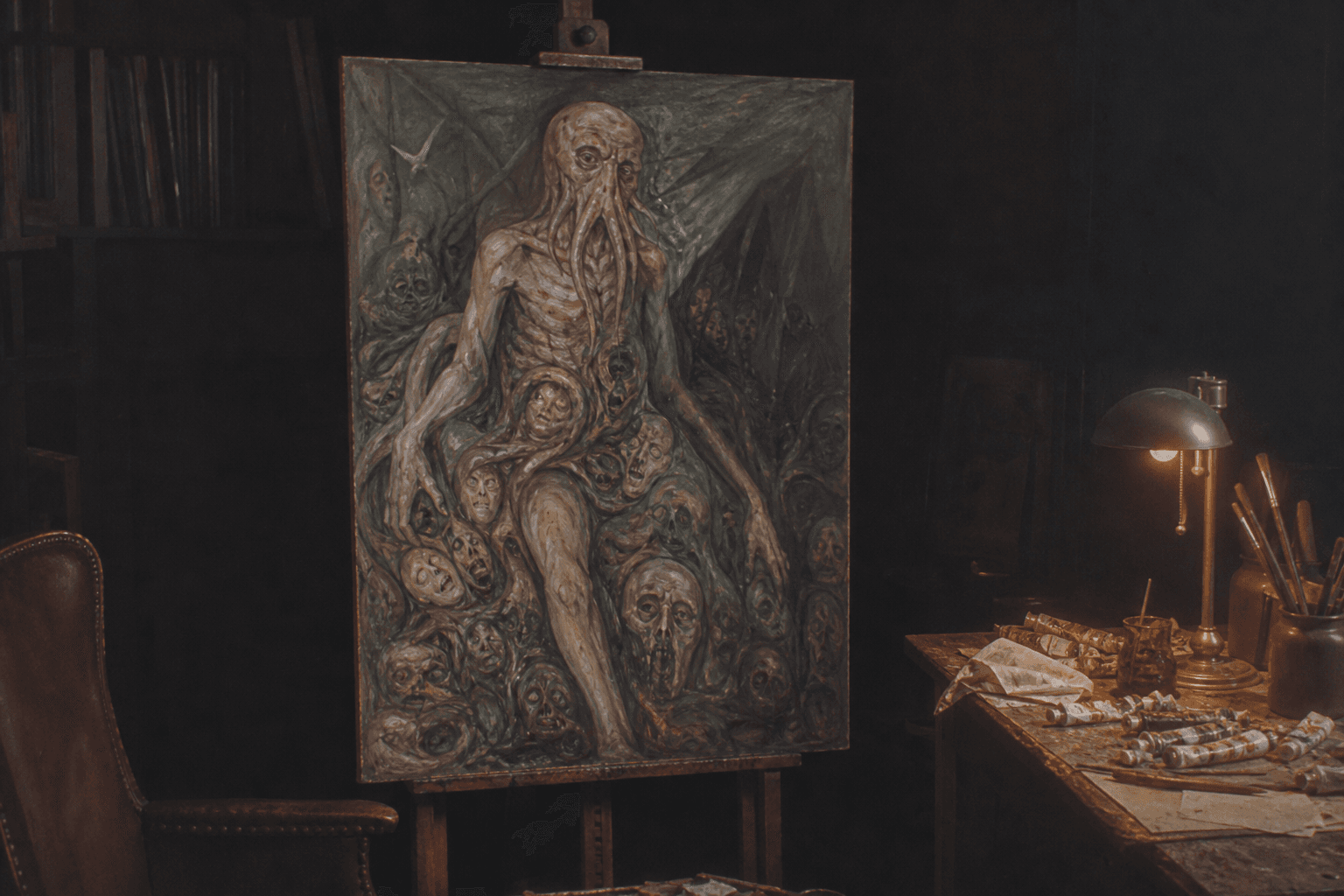
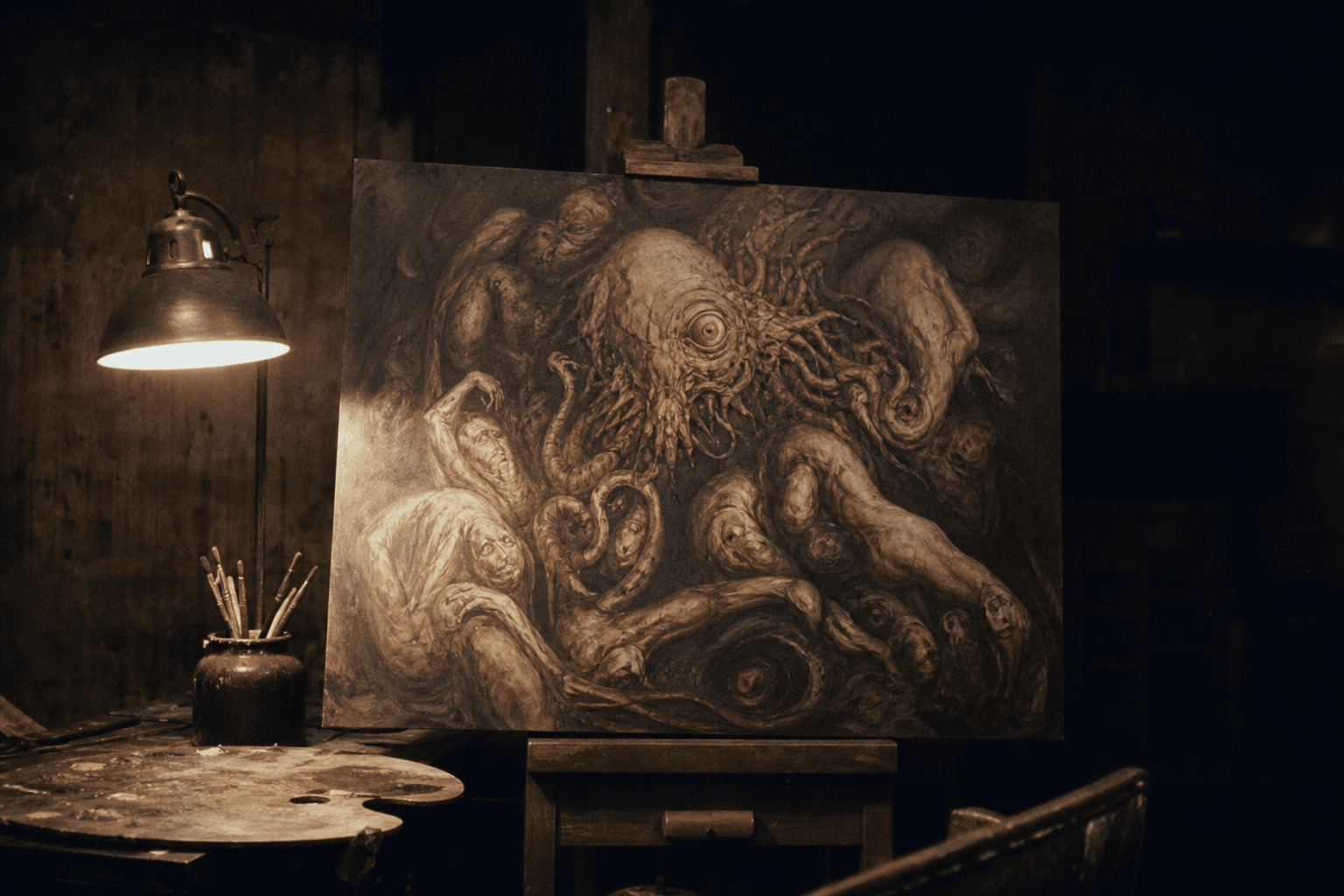
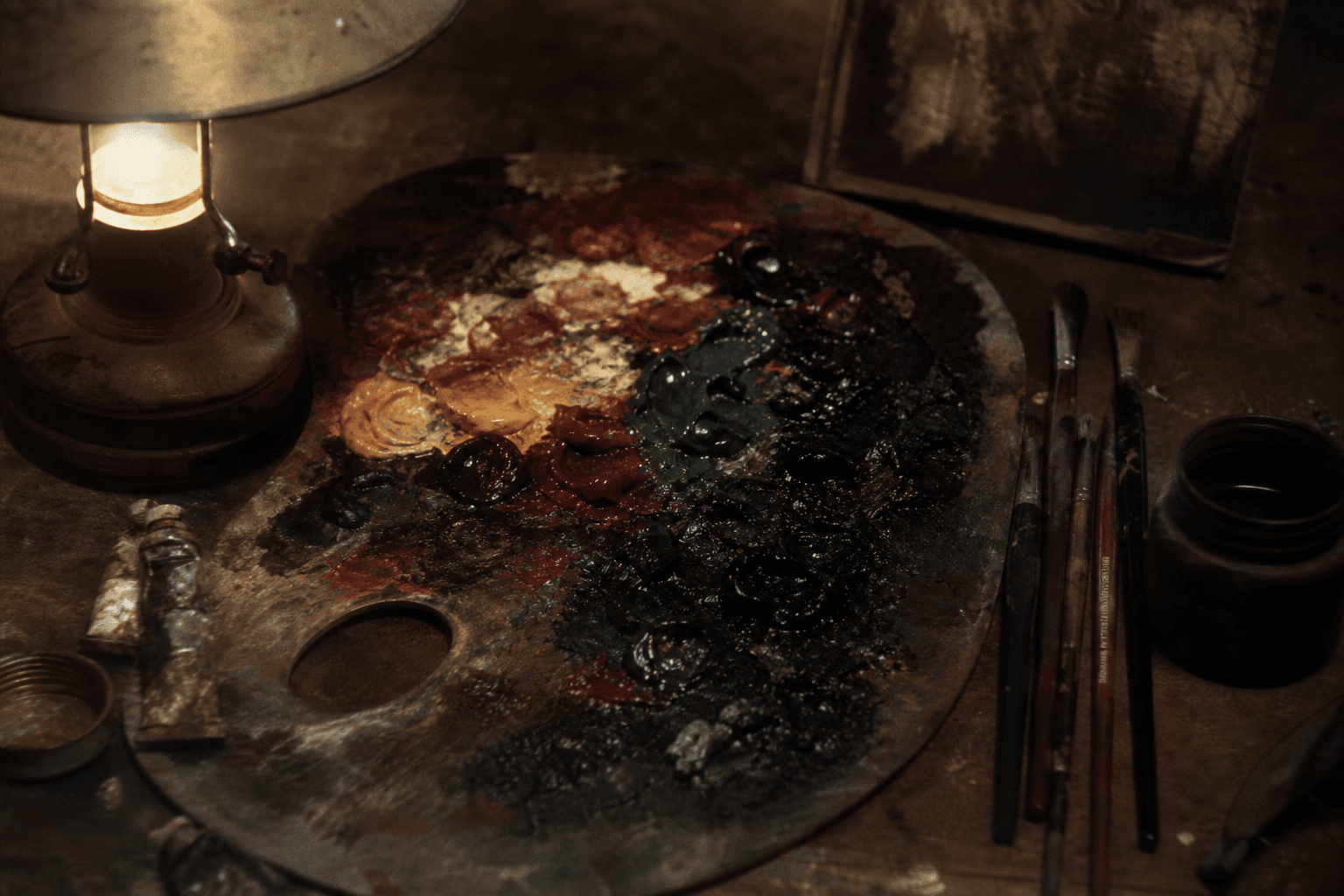
Search clusters richard upton pickman and pickman's model painting should land on character plus archive story records, not on unattributed fan canvases. When illustrating syllabi, cite one licensed edition image or public-domain text excerpts; avoid presenting fan work as canonical faces of Pickman's models.
The paintings in culture
In culture, Pickman's Model inspired fan galleries, RPG scenarios, academic papers on horror art ethics, and the durable trope of "too realistic monster painting" in games and films that never name Lovecraft. The story's visual hook - canvases that could only be painted from life among ghouls - travels better than obscure god-names, which is why search traffic clusters on pickman's model painting and richard upton pickman rather than on Necronomicon citations.
The paintings as cultural objects
Treat published fan art as interpretation: commentary on representation, body horror, and the ethics of displaying trauma. Museum visits to real Boston are optional pilgrimage; they are not canon. When anthologies illustrate Pickman's canvases, compare illustration choices to Lovecraft's text - he emphasizes anatomical precision, not generic tentacles.
Gallery tropes that descend from Pickman
Horror cinema and games repeatedly stage forbidden exhibitions - works that drive viewers mad, galleries that hide a final room, patrons who disappear. Those tropes owe a debt to Pickman even when credits omit Lovecraft. Document influences in classroom or streaming notes, but return students to /archive/pickmans-model for primary evidence.
Expedition use: art forensics vs. plot summary
This dispatch supports art forensics framing - how realism becomes accusation - while /archive/pickmans-model holds spoilers and timeline. Link forward to /cthulhu-mythos when ghoul lore connects to wider underworld geography; link backward to Where to Start for placement in a first-month syllabus. Bold keyword discipline: Pickman, ghoul, North End, mimesis - each should route curiosity to archive dossiers, not to boilerplate disclaimers.
Exhibitions in games and film
Tabletop and video games love the gallery last room because it is a set-piece with a built-in reveal. Document those adaptations as commentary on Lovecraft's representation theme; when a game adds combat in the cellar, note how that choice replaces accusation with survival mechanics. Return players to primary text when they ask whether Pickman is mythos - he is human-scale horror that intersects ghoul geography later.
Art history and ethics syllabi
Assign Pickman's Model beside essays on ethical spectatorship - who may look at suffering, who may paint it, and when realism becomes evidence. The story pairs well with /archive/pickmans-model timelines and with Arkham, Massachusetts for regional context; it does not require prior Cthulhu knowledge, which makes it ideal mid-semester after The Call of Cthulhu establishes mythos scale. Route readers to /cthulhu-mythos after ghoul geography is defined, not before.
North End geography and archive slugs
Salem Street and cellar descent reward readers who treat Boston as its own archive cluster - /archive/pickmans-model links ghouls, Thurber, and gallery refusals without requiring Arkham first. Assign Pickman's Model when a syllabus needs urban claustrophobia before coastal Innsmouth genetics; the mimesis argument lands faster when students have not yet memorized god names from /cthulhu-mythos.
Evidence 01
Evidence 02
Dispatch PICKMANS_MODEL_ART · Primary keyword: pickman's model painting