


Research Guide
The King in Yellow & Carcosa
A play that drives readers mad, a city by a lake, and a name that Lovecraft borrowed to thicken the mythos - Hastur's yellow sign.
Origins outside Lovecraft
The King in Yellow begins with Robert W. Chambers's 1895 collection - a decadent, symbolist book about a forbidden play called The King in Yellow and a lost city, Carcosa, beside the Lake of Hali. Lovecraft admired Chambers and wove Hastur, Carcosa, and the Yellow Sign into his own fiction and correspondence without writing a single definitive Hastur novel equivalent to The Call of Cthulhu.
Chambers before Lovecraft
The archive treats Chambers as a precursor text, not as Lovecraft canon, but cross-pollination is essential to understanding later mythos games and anthologies. Readers searching king in yellow lovecraft should expect allusion and atmosphere first - plot authority lives in Chambers for the play, in Lovecraft for the citations.
Carcosa as shared symbol
Carcosa - twin suns, black stars, pallid mask - travels farther than rigorous mythos scholarship sometimes prefers. Document that travel honestly: shared symbol, not single franchise. Link to /archive/cosmic-horror for scale aesthetics Chambers and Lovecraft both weaponize.
The forbidden play as literary device
Chambers's King in Yellow play is text we rarely read - madness spreads by reputation, like forbidden books in Lovecraft. Compare that device to /archive/necronomicon citations: both traditions weaponize bibliography without delivering full scripture to the reader.
Decadence, symbolists, and yellow imagery
Yellow in Chambers is decadent atmosphere - sickrooms, masks, twin suns - not yet the mythos palette games codified. Read Chambers for mood; read Lovecraft for citations that borrow mood into New England conspiracy fiction. /cosmic-horror helps students name scale before they hunt Hastur stats online.
Lovecraft's use
In stories such as The Whisperer in Darkness and The Festival, Lovecraft alludes to yellow signs and names fans map onto Hastur. He never fixes one authoritative Hastur story - the King in Yellow remains fragmentary, collaborative, and allusive across authors. That fragmentation explains modern RPG sandboxes where Yellow Sign cults appear without textual consensus.
Hastur as shared symbol
Readers searching yellow king lovecraft or carcosa lovecraft should expect mood boards of references, not a single timeline. Compare with Nyarlathotep (/archive/nyarlathotep) - a entity with clearer Lovecraftian dossier - without conflating every yellow reference with every mask of the Crawling Chaos unless textual evidence supports it.
Lovecraft–Chambers–Derleth chain
Our Literary Circle dispatch places Chambers in the precursor lane and Derleth in the systematizer lane. /cthulhu-mythos indexes Lovecraftian core; this hub indexes borrowed symbols that thickened the tradition after Chambers and before later pastiche.
Hastur without a single Lovecraft novel
Lovecraft alludes to yellow signs and Carcosa without fixing one Hastur timeline - expect fragmentary dossiers, not Cthulhu-level plot authority. Use /archive/nyarlathotep when students need a named entity with clearer Lovecraftian incidents; use Chambers for play and city mood.
Festival and whisperer anchors
The Festival and The Whisperer in Darkness (/archive/the-whisperer-in-darkness) are common Lovecraft entry points for yellow imagery - assign them after Chambers so allusion reads as inheritance, not contradiction. /cthulhu-mythos collects gods; this hub collects borrowed symbols that lack a single novel spine.
What to read
Start with Chambers's collection, then Lovecraft's mythos tales that mention Carcosa or Hastur - The Whisperer in Darkness (/archive/the-whisperer-in-darkness) is a common anchor. Compare tabletop RPG expansions only after grounding in primary texts; game lore often merges Hastur, Nyarlathotep, and original villains for scenario convenience.
Primary texts vs. game lore
When a module names Carcosa but cites no passage, mark it commentary. When Lovecraft alludes without explaining, mark it intentional gap - cosmic horror thrives on partial knowledge.
Expedition routing
For Nyarlathotep as distinct entity, read /archive/nyarlathotep. For cosmic horror definition, read /cosmic-horror. For Chambers-to-Lovecraft history, read Literary Circle. Read Chambers before blaming Lovecraft for every yellow reference in later games - the play remains Chambers fiction first; Lovecraft alludes, he does not finish it.
Tabletop Carcosa and citation discipline
RPG Carcosa modules often merge Hastur, Nyarlathotep, and original villains - mark those merges commentary unless a scenario quotes Lovecraft or Chambers by passage. Primary routing stays /archive/the-whisperer-in-darkness plus /cthulhu-mythos for Lovecraftian anchors.
Chambers collection as single volume
Read Chambers's collection as one decadent book before chasing Hastur wiki trees - stories share Carcosa mood more than they share plot. Then assign Lovecraft mythos tales that cite yellow imagery so students see literary borrowing in action rather than franchise continuity.
When to stop at Chambers
If a syllabus ends with Chambers only, you have taught decadent horror, not Lovecraftian mythos - add at least one Lovecraft anchor from /archive/the-whisperer-in-darkness or /cthulhu-mythos before calling the unit complete.
Archive Records
Primary Sources
Canonical dossiers for this topic. Read these for plot detail, entities, and cross-references—not the hub summary above.
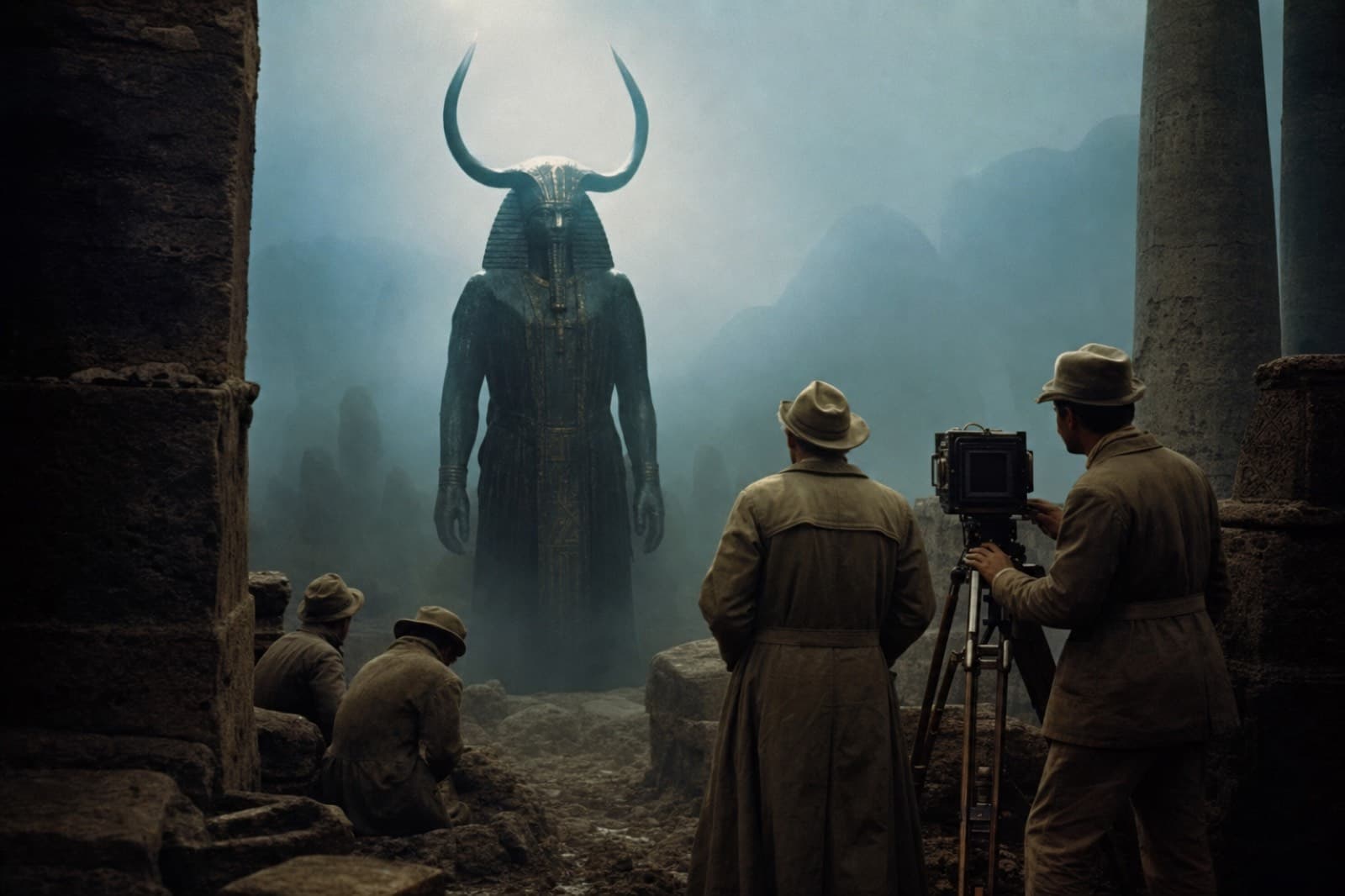
OG-003
activeNyarlathotep
The Crawling Chaos
A protean messenger who walks among humanity in countless guises, sowing madness and progress alike, the one Outer God who seems to enjoy our suffering.

CON-001
activeCosmic Horror
Philosophical Classification
Horror arising not from personal evil but from the insignificance of humanity before an indifferent, incomprehensible cosmos - the aesthetic that governs every file in this archive.
Field Dispatches
Related Briefings

Guide KING-IN-YELLOW · Keyword focus: king in yellow lovecraft