


Research Guide
Lovecraft, Poe & Tolkien
Readers compare Lovecraft to Poe for horror lineage and to Tolkien for world-building — useful frames if you know what each comparison claims.
The Poe lineage
Lovecraft called Edgar Allan Poe his most immediate influence in Supernatural Horror in Literature. Poe taught him atmosphere, first-person dread, and the idea that the mind is the true haunted house. But Lovecraft pushes further into cosmic scale and materialist indifference — less guilty conscience, more geology and deep time.
Exegesis routes through Lovecraft’s own criticism
For exegesis lovecraft searches, start with that essay dispatch, then read /archive/cosmic-horror as the operational definition Lovecraft preferred over “supernatural” ghost fiction. Pair Poe’s claustrophobia with /archive/forbidden-knowledge when you teach epistemic horror — learning hurts because reality is large, not because a ghost seeks revenge.
Stories that show the Poe bridge
Read /archive/the-call-of-cthulhu for documentary dread, then a Poe tale for interior collapse. The comparison is not “who is scarier” but what kind of unknown each author stages. Lovecraft’s unknown is often non-human and indifferent; Poe’s is often moral and psychological.
Why Tolkien comparisons appear
Lovecraft tolkien comparisons are usually about world-building: invented geographies, languages, and shared mythologies. Tolkien built a coherent secondary world on purpose; Lovecraft built a shared rumor — names repeated across stories by friends in pulp, later systematized by publishers and fans. The /cthulhu-mythos hub explains that social expansion without pretending Lovecraft wrote a franchise bible.
Different emotional contracts
Tolkien is not a horror guide; do not expect the same emotional contract. If you want mythic geography without cosmic pessimism, Tolkien belongs on another shelf. If you want collaborative mythos growth, read Literary Circle and trace how Arkham, Innsmouth, and Miskatonic became shared furniture.
When the comparison helps syllabus design
Use Tolkien to teach maps and languages; use Lovecraft to teach forbidden archives and species deep time. /archive/at-the-mountains-of-madness is the classroom capstone for world-building by excavation, not by elvish chronology.
Study routes
Students writing comparison papers should cite primary text in /archive and critical essay material in Field Dispatches. Avoid treating either author as “winner.” Ask what each does with knowledge, evil, and scale — and whether evil is personal, cosmic, or genealogical.
Paper structure that cites witnesses
Open with Supernatural Horror in Literature, anchor claims in /archive/the-call-of-cthulhu or /archive/forbidden-knowledge, and use /glossary for defined mythos terms. Wikipedia is a map, not a witness.
Biography and circle context
Add Lovecraft Biography when comparisons slide into author intent. Lovecraft’s letters show how he read Poe; they do not make him Tolkien’s peer in craft project — only in influence conversations online. Bold discipline: compare texts, not fandom rankings. Finish comparison units on /cosmic-horror so students leave with mode vocabulary, not only author names they will forget by exam week. Comparative essays should include at least one Poe primary witness alongside one Lovecraft archive dossier so claims about influence rest on texts, not on lecture slides alone.
Archive Records
Primary Sources
Canonical dossiers for this topic. Read these for plot detail, entities, and cross-references—not the hub summary above.
CON-001
activeCosmic Horror
Philosophical Classification
Horror arising not from personal evil but from the insignificance of humanity before an indifferent, incomprehensible cosmos - the aesthetic that governs every file in this archive.
CON-002
activeForbidden Knowledge
Epistemic Hazard
Information whose acquisition damages the seeker - truths the mind evolved specifically not to accommodate, and that no degree of education prepares one to survive.
STY-001
activeThe Call of Cthulhu
Incident Record - 1925
A global wave of dreams, cult activity, and the brief emergence of R'lyeh documented through fragmented testimony - the case that proved the mythos was not regional but planetary.
Field Dispatches
Related Briefings
Field Dispatch
Supernatural Horror in Literature (1927)
Lovecraft's 1927 essay on supernatural horror - key arguments, famous quotes, and its lasting place in horror theory and criticism.
Read dispatch →

Field Dispatch
H. P. Lovecraft - Biography
Howard Phillips Lovecraft's life: Providence, Weird Tales, marriage to Sonia Greene, literary friendships, and the worldview behind cosmic horror.
Read dispatch →
Field Dispatch
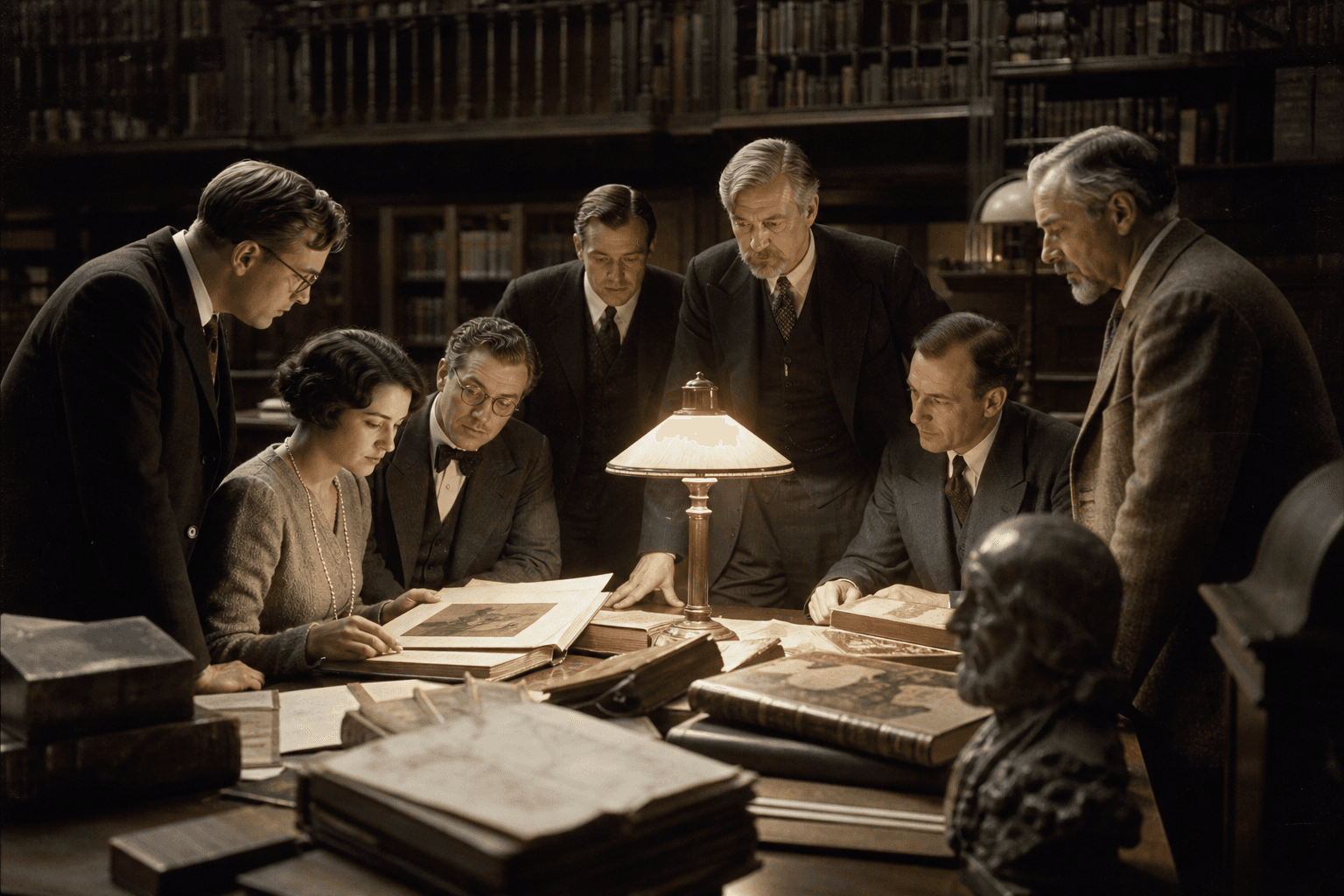
Lovecraft's Literary Circle & Influences
Edgar Allan Poe, Lord Dunsany, Clark Ashton Smith, Robert E. Howard, and August Derleth - how Lovecraft's circle shaped the mythos.
Read dispatch →
Guide LOVECRAFT-POE-TOLKIEN-INFLUENCES · Keyword focus: lovecraft poe