
Field Dispatch
Supernatural Horror in Literature (1927)
Theoretical framework document ME-ESSAY-1927.
Essay summary
The essay as map, manifesto, and weather report
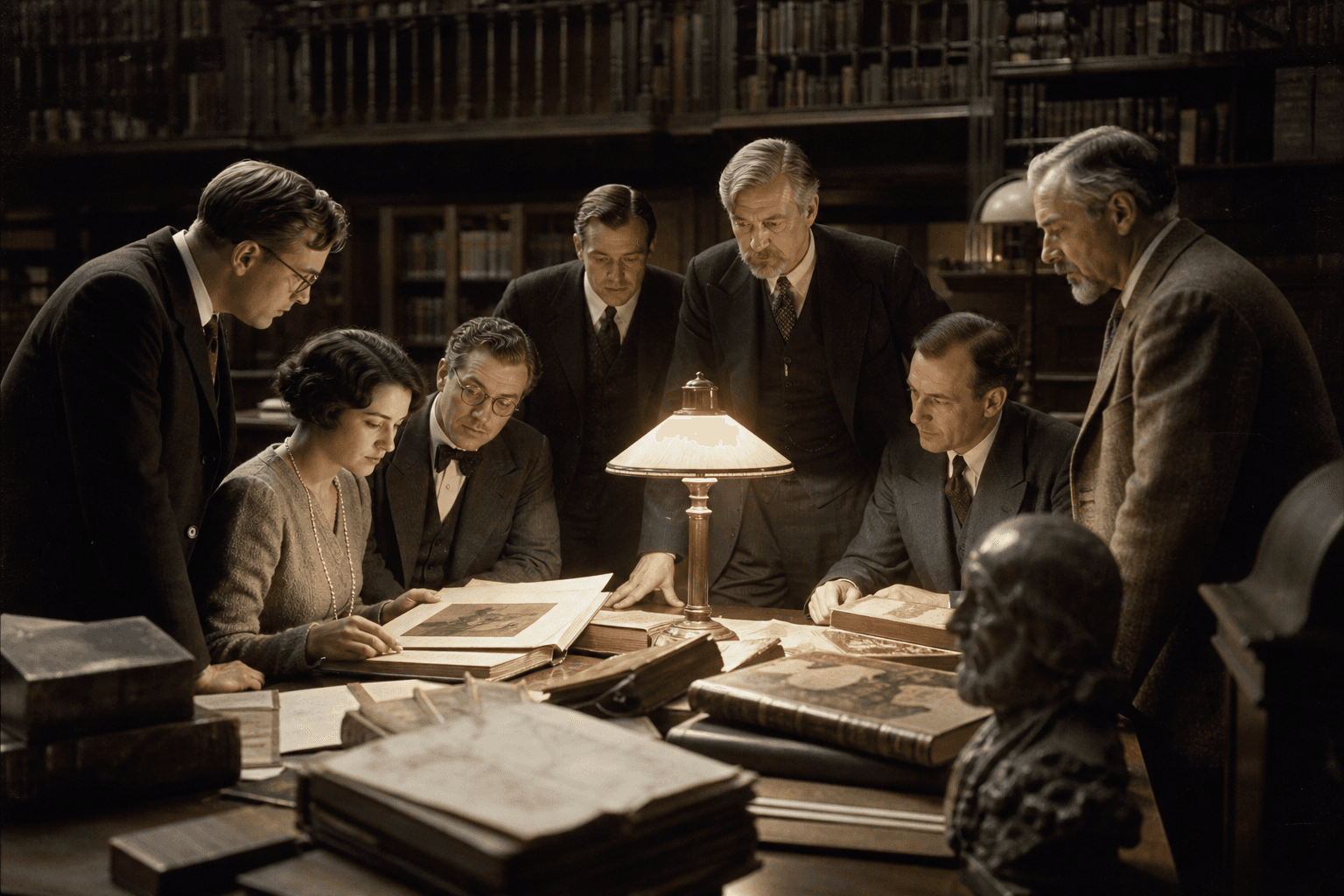
Supernatural Horror in Literature is Lovecraft's long critical survey of fear, first appearing in the 1920s and later revised as his reading widened. It moves from folklore and Gothic fiction through Poe, Hawthorne, Machen, Blackwood, M. R. James, Dunsany, and the weird writers nearer his own moment. As horror criticism, the essay is uneven, opinionated, sometimes unfair, and still indispensable. It tells us which ghosts Lovecraft thought worth following, which doors he thought led only to melodrama, and which atmospheres he believed could make the universe feel suddenly less human.
The famous thesis is that the oldest and strongest human emotion is fear, and the oldest and strongest kind of fear is fear of the unknown. That sentence has been quoted into near exhaustion, but in context it is less a slogan than a field instrument. Lovecraft is trying to distinguish true supernatural horror from simple shock, moral fable, or adventure machinery. For him, the highest weird tale produces a shudder of violated order. The reader should feel that ordinary categories have failed. This is why the essay belongs beside the cosmic horror dossier /archive/cosmic-horror and not merely on a shelf of literary history.
Canon, prejudice, and the critic's blind spots
The essay also reveals Lovecraft's limitations. His canon is shaped by taste, access, prejudice, and the assumptions of his class and period. He can praise suggestion while writing stories that over-explain; he can dismiss a writer in one mood and borrow a method in another. That tension is useful. Read Supernatural Horror in Literature with Biography and Literary Circle open nearby, and the document becomes more than a reading list. It becomes Lovecraft arguing with his own future work, laying down principles that The Call of Cthulhu /archive/the-call-of-cthulhu, The Colour Out of Space /archive/the-colour-out-of-space, and At the Mountains of Madness /archive/at-the-mountains-of-madness will test under field conditions.
For teachers and search readers hunting classic horror literature, this dispatch is the widening corridor after Where to Start Lovecraft. It names the ancestors so the primary fiction does not look like it arrived from nowhere.
Key passages
Key passages and how to handle them
The most repeated lines from Supernatural Horror in Literature are useful, but they should be handled like artifacts removed from unstable ground. The sentence on fear of the unknown anchors thousands of later essays on cosmic horror, yet Lovecraft is not saying all fear is noble or that ignorance alone makes literature. He is arguing for atmosphere, imaginative seriousness, and the sense that a tale has opened onto something larger than plot. The difference matters. A tentacle without metaphysical pressure is only furniture; a whisper behind the wall can be cosmic if it rearranges the reader's sense of reality.
Another important passage praises stories where the strange event cannot be comfortably related to common experience. That idea explains the documentary structure of The Call of Cthulhu /archive/the-call-of-cthulhu, where scattered clippings and testimonies never become full mastery. It also clarifies From Beyond /archive/from-beyond, where the horror is not just the creature seen but the suspicion that perception has always been incomplete. The essay gives a vocabulary for these effects: suggestion, atmosphere, outside-ness, and imaginative dread. Modern Lovecraftian Horror keeps returning to those terms even when contemporary writers reject Lovecraft's politics.
Quotation without flattening
Quotation can also flatten the essay into commandments. Field practice should be more exact. Ask what Lovecraft was defending, what he was excluding, and how later fiction complicates him. Stephen King on Lovecraft, Junji Ito, and Gou Tanabe all show different afterlives of the same core principle: terror intensifies when the known world stops being sufficient. The best use of the famous passages is not to police genre borders but to sharpen reading.
When someone calls a work Lovecraftian, the essay helps us ask whether the label describes cosmic scale, forbidden knowledge, anti-human perspective, inherited imagery, or merely a monster with extra limbs. Keep the quotes in motion. A principle that cannot survive contact with The Shadow Out of Time /archive/the-shadow-out-of-time was never really Lovecraft's principle - only a poster version of it.
Impact on the genre
Influence on later horror criticism and practice
The afterlife of Supernatural Horror in Literature extends far beyond Lovecraft studies. Editors, critics, teachers, and writers have used it to justify weird fiction as an art of atmosphere rather than a carnival of shocks. Stephen King can praise Lovecraft while writing more emotionally populated novels; Ramsey Campbell can inherit the pressure of place without copying New England; Thomas Ligotti can turn cosmic dread inward until philosophy itself feels diseased. The essay's Lovecraftian horror vocabulary travels because it names a sensation many works seek: the collapse of human centrality.
Yet influence does not mean obedience. Modern writers frequently accept Lovecraft's technical insight while refusing his exclusions. Lovecraft Country, Modern Lovecraftian Horror, and the Deep Ones dispatch show that the essay's theory of fear can be repurposed against the blind spots of the man who wrote it. A field dispatch should welcome that reversal; living traditions survive by being contested.
Using the essay as a lens on primary texts
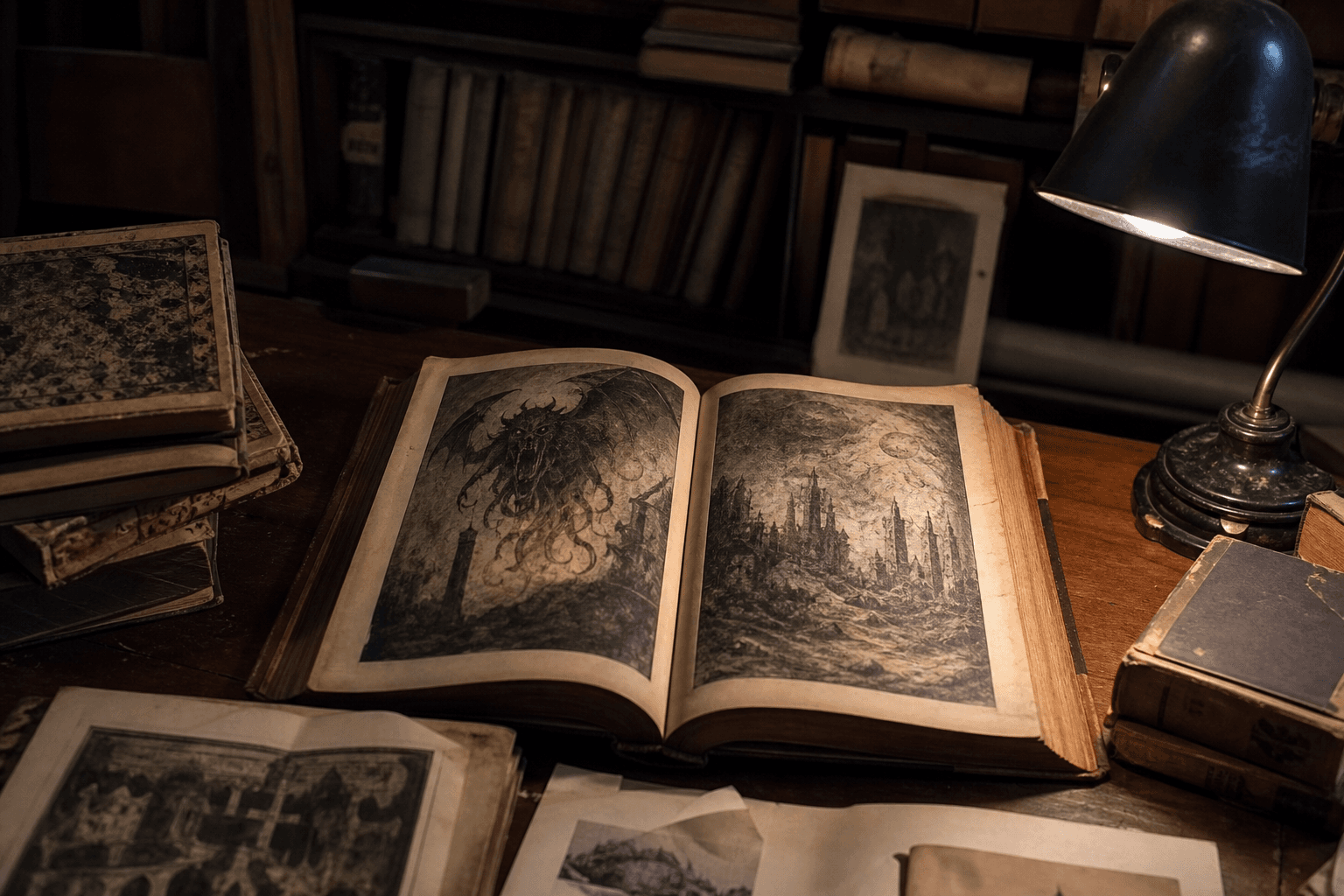
For archive navigation, the essay is best used as a lens before entering the primary dossiers. Read its account of atmosphere, then open Pickman's Model /archive/pickmans-model and note how art becomes evidence. Read its claims about cosmic awe, then open The Shadow Out of Time /archive/the-shadow-out-of-time and watch history swallow biography. Read its taste for suggestion, then open The Whisperer in Darkness /archive/the-whisperer-in-darkness, where radio, folklore, and alien science blur.
The essay does not solve these stories. It equips the reader to notice where the air changes. Pair it with Houellebecq on Lovecraft when the question is temperament rather than lineage, and with Religion & Materialism when the unknown arrives wearing god-language that the fiction refuses to honor.
The hidden reading list inside the argument
One practical value of Supernatural Horror in Literature is its embedded syllabus. Lovecraft names ancestors and near-contemporaries with enough force that the essay becomes a trail map for readers who want to move beyond one author. Poe supplies compression and psychological architecture. Arthur Machen offers pagan survivals and revelations under modern surfaces. Algernon Blackwood gives landscape a living pressure. M. R. James demonstrates antiquarian restraint, where a manuscript, whistle, or engraving can summon more dread than an army of visible beasts. These names explain the deeper roots of weird fiction.
The trail also explains why Lovecraft's own categories should not be treated as prison walls. Machen helps illuminate cultic inheritance in The Dunwich Horror /archive/the-dunwich-horror; Blackwood helps illuminate non-human nature in The Colour Out of Space /archive/the-colour-out-of-space; James helps illuminate documents, libraries, and scholarly overreach around the Necronomicon /archive/necronomicon. Dunsany, covered more fully in Literary Circle, helps explain the Dream Cycle and The Dream-Quest of Unknown Kadath /archive/the-dream-quest-of-unknown-kadath. The essay is therefore less a museum catalogue than a set of coordinates.
From theory to field syllabus
For readers searching where to start with classic horror literature, this dispatch widens the corridor after Complete Reading Order. It also shows Lovecraft as critic before brand: a reader making a case for atmosphere in a literary culture that often treated ghostly fiction as disposable entertainment. The case is biased and incomplete, but it remains alive because it sends the reader outward.
A good field copy of the essay should be dirty at the edges, annotated with agreements, objections, and names to pursue after the lantern burns low. When you leave the essay, open The Whisperer in Darkness /archive/the-whisperer-in-darkness and ask which ancestor's method is loudest in that story's mix of folklore, science, and alien rumor.
Evidence 01

Evidence 02
Dispatch SUPERNATURAL_HORROR_IN_LITERATURE · Primary keyword: supernatural horror in literature