

Field Dispatch
Lovecraft, Religion & Materialist Cosmicism
Theological incident analysis - cults as sociology not faith.
Lovecraft's worldview
Atheist materialism beneath the god-names
Lovecraft's fiction is crowded with gods, cults, rites, blasphemous books, and forbidden names, but his own worldview was atheist materialism rather than occult belief. The distinction is essential. Cthulhu /archive/cthulhu, Yog-Sothoth /archive/yog-sothoth, Nyarlathotep /archive/nyarlathotep, and the presences behind the Necronomicon /archive/necronomicon are called gods because frightened human beings reach for religious vocabulary when ordinary categories fail. In Lovecraft's deepest logic, they are not moral rulers of creation. They are alien, interdimensional, ancient, or otherwise natural within a cosmos too large for human nature to understand.
This materialist foundation is what separates Lovecraft's cosmic horror /archive/cosmic-horror from many older supernatural traditions. A demon implies a spiritual order, even if hostile. A ghost implies survival after death. A devil implies a universe where rebellion still has theological meaning. Lovecraft's strongest terrors remove that structure. The horror is not that evil wins; it is that good and evil were local human habits all along. At the Mountains of Madness /archive/at-the-mountains-of-madness makes ancient life scientific before it is monstrous. The Colour Out of Space /archive/the-colour-out-of-space treats catastrophe as contact with something outside terrestrial chemistry.
Reading god-language as misfiled data
Religion & Materialism should be read beside Supernatural Horror in Literature because Lovecraft's theory of fear depends on unknown forces, not orthodox devils. It also belongs beside Selected Letters, where he states his views more directly and sometimes more crudely. The field reader should mark every place where religious language appears, then ask what the story does with it. Often the answer is inversion: prayer becomes noise, scripture becomes misfiled data, and revelation becomes evidence that no one is listening.
For search readers asking is Lovecraft religious or Lovecraft atheism, the answer is not that the fiction lacks gods. It is that the god-language is a human label pasted onto forces that do not confirm human spiritual importance. The label peels at the edges whenever the story gets cold enough.
Religious imagery without religious comfort
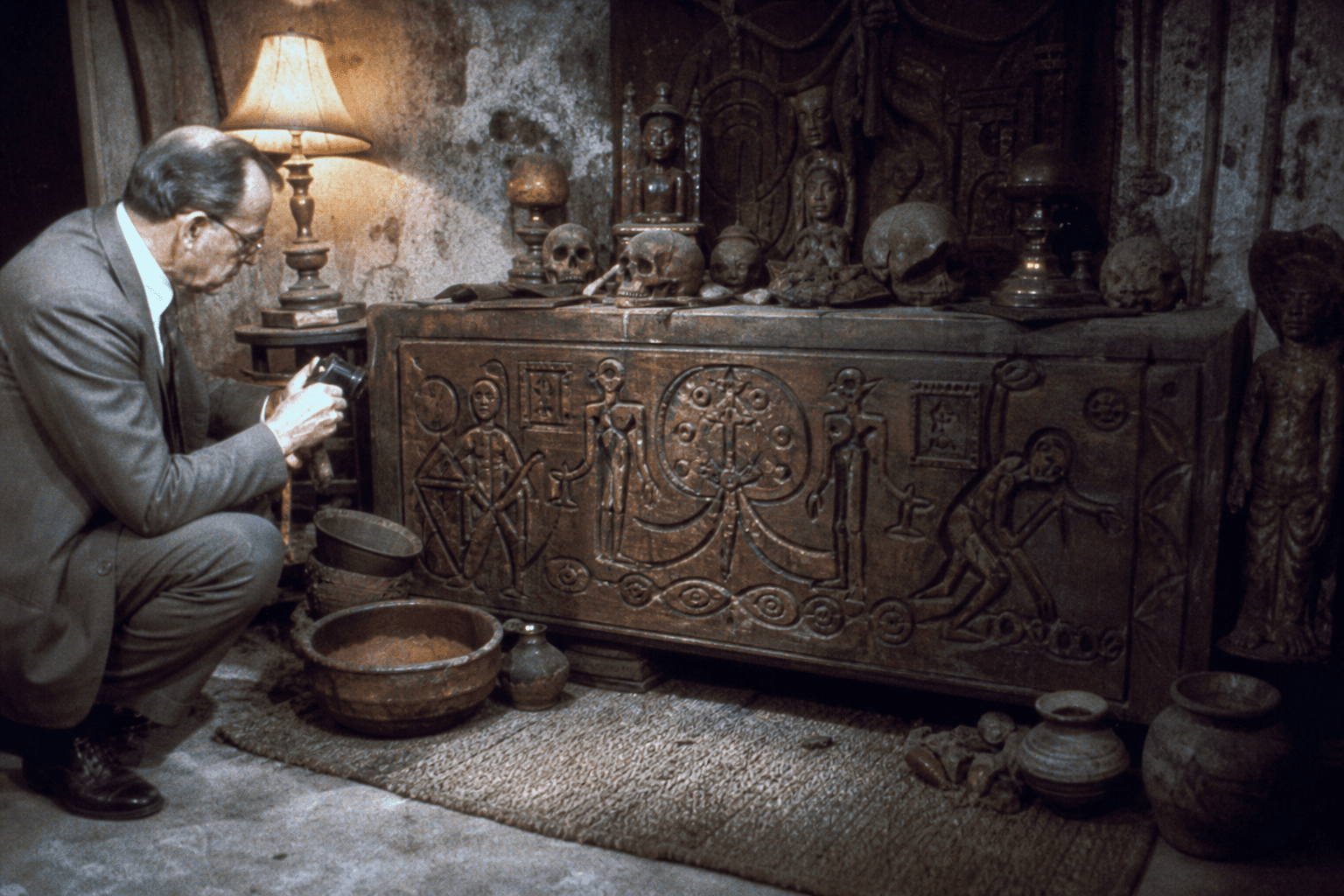
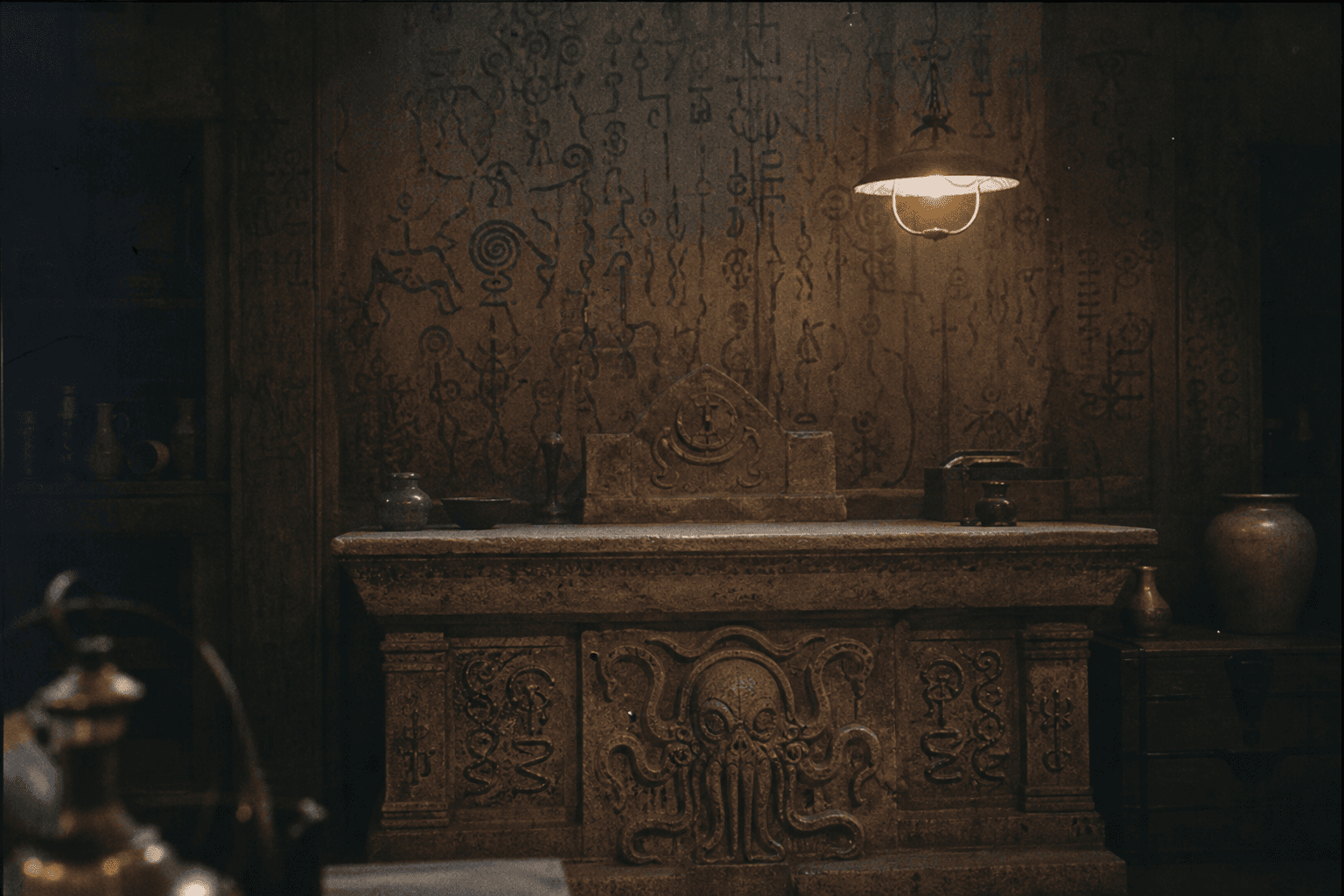
Lovecraft repeatedly borrows religious imagery because it carries old fear efficiently. Sabbaths, idols, forbidden scriptures, blasphemous chants, priestlike scholars, and temples under sea or earth all arrive charged before the story explains them. Yet the charge is aesthetic and anthropological more than devotional. The Necronomicon /archive/necronomicon behaves like a scripture in the hands of narrators, but its terror is bibliographic and evidentiary: it records facts the world would be safer not to know. A cult idol may resemble a sacred object, but it points toward biology, astronomy, or dimensional intrusion rather than grace.
This is why The Thing on the Doorstep /archive/the-thing-on-the-doorstep, From Beyond /archive/from-beyond, and The Whisperer in Darkness /archive/the-whisperer-in-darkness can feel occult while remaining compatible with materialist dread. Bodies can be exchanged, senses expanded, brains transported, and human identity exposed as fragile mechanism. The language of possession or soul-loss may hover nearby, but the stories often replace theology with procedure. Lovecraft takes the emotional furniture of religion and moves it into a laboratory with poor lighting.
Scripture, idol, and laboratory
Readers should compare this strategy with Supernatural Horror in Literature and Houellebecq on Lovecraft. The essay explains why atmosphere and unknown implication matter; Houellebecq stresses the anti-human effect. Religion & Materialism adds the operating principle: the unknown may be natural without being comforting.
That is a crucial distinction for anyone searching Lovecraft gods explained. The fiction uses god-language because humans reach for it first. The dispatch asks what remains when the language stops pretending to be true. Cross-link Asenath Waite when the horror is bodily exchange rather than coastal cult economics.
Cults in fiction
Cults as misreading, inheritance, and social panic
Lovecraft's cults are rarely examples of sincere religion in the ordinary sense. They are human systems built around fear, bargain, heredity, power, or misinterpretation. In The Call of Cthulhu /archive/the-call-of-cthulhu, the cult preserves fragments of knowledge about an entity that does not need worship to remain dangerous. In The Shadow over Innsmouth /archive/the-shadow-over-innsmouth, the Esoteric Order of Dagon grows from transaction and community corruption: Obed Marsh's bargain, the Deep Ones /archive/deep-ones, and a town's slow surrender to survival at any cost. In The Dunwich Horror /archive/the-dunwich-horror, ritual and breeding turn family secrecy into cosmic exposure.
The word cult can tempt readers into easy robes-and-chanting imagery, but the fiction usually works through more specific pressures. Innsmouth /archive/innsmouth is economic desperation and hereditary dread. Dunwich /archive/dunwich is rural isolation, family decay, and forbidden instruction. Red Hook is contaminated by Lovecraft's xenophobia and must be read critically as social panic wearing occult clothing. Deep Ones Explained helps separate the narrative machinery from later game shorthand, where cultists often become disposable enemies instead of symptoms of a deeper arrangement.
Worship without consolation
Materialism makes these cults bleaker. The worshippers are not guaranteed salvation, damnation, or even accurate doctrine. They may be useful, deluded, altered, or simply inherited into systems they cannot escape. That is why Religion & Materialism cross-links naturally to Eldritch Horror and Lovecraft on Screen: adaptations often simplify the cult into a visual code, while the original stories use belief to expose how poorly humans understand the powers they approach.
The field note is blunt: in Lovecraft, worship does not make the universe meaningful. It often proves how desperate meaning has become. Pair cult reading with Literary Circle to remember how friends shared cult props long before any game needed factions.
Science, deep time, and the collapse of human centrality
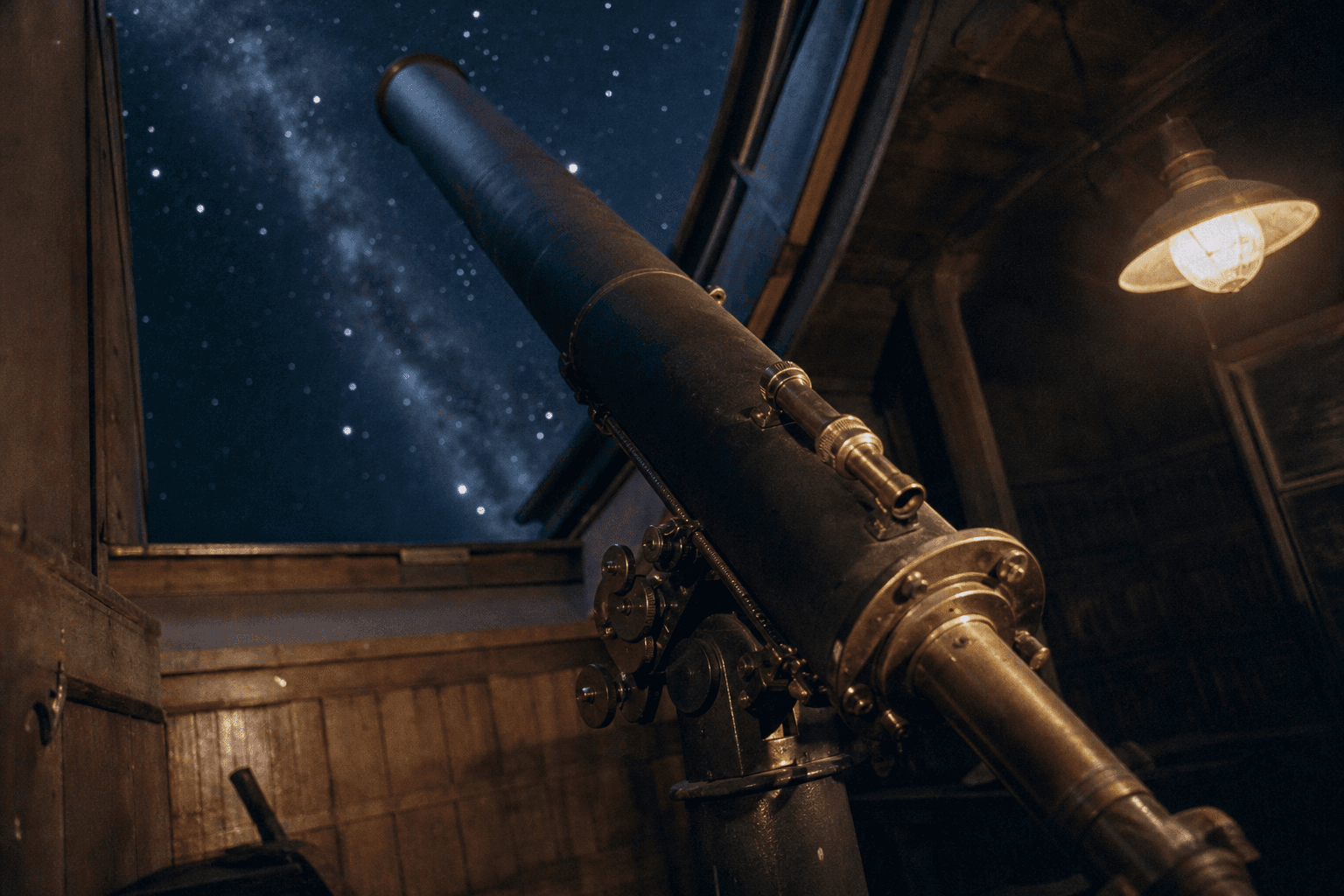
Lovecraft's materialism is not merely denial of religion; it is fascination with science as a source of terror. Astronomy, geology, evolutionary theory, chemistry, and speculative physics open abysses that older supernatural fiction did not need. The stars are not decorative backdrops. They are measurements of human smallness. Deep time is not a lesson in humility offered by a kindly cosmos. It is the discovery that humanity occupies a brief, local interval in a history that was strange before us and will remain strange after us. This is the backbone of Lovecraftian materialism.
At the Mountains of Madness /archive/at-the-mountains-of-madness is the major exhibit: an Antarctic expedition discovers that human civilization is late, derivative, and biologically unprivileged. The Shadow Out of Time /archive/the-shadow-out-of-time extends the blow across epochs and minds. The Colour Out of Space /archive/the-colour-out-of-space makes even local agriculture vulnerable to an arrival outside terrestrial categories. In these stories, science does not save the investigator by restoring order. It gives better instruments for measuring the disorder.
Updated scientific dread
This is where Religion & Materialism meets Modern Lovecraftian Horror. Contemporary writers often update the scientific anxieties: climate systems, artificial intelligence, epidemiology, quantum speculation, genetic inheritance, and deep-sea ecology. The Lovecraftian inheritance is not a fixed pantheon but a method for making knowledge feel dangerous without making ignorance heroic.
Read this dispatch beside Eldritch Horror, Stephen King on Lovecraft, and Complete Reading Order to see how the scientific sublime keeps changing masks. The field conclusion is simple and severe: Lovecraft did not need hell beneath the floorboards. He had the universe, and he believed it was enough to unmake us without ever noticing we were gone. Cross-link Deep Ones Explained when cult economics blur into marine biology rather than theology. Add Wilbur Whateley when hillside breeding programs replace robed ceremony. Pair Asenath Waite when possession language masks identity theft rather than faith. Read The Dreams in the Witch House /archive/the-dreams-in-the-witch-house when mathematics, not prayer, becomes the corridor. Stephen King on Lovecraft offers a popular counterexample where human feeling returns after cosmic exposure. See Lovecraft Country for reclamation that keeps materialist cult logic under critique.
Evidence 01
Evidence 02
Dispatch LOVECRAFT_RELIGION_AND_MATERIALISM · Primary keyword: lovecraft religion