

Field Dispatch
The Selected Letters of H. P. Lovecraft
Intercepted correspondence - primary sources for mythos dating.
Why read the letters?
The second canon in envelopes
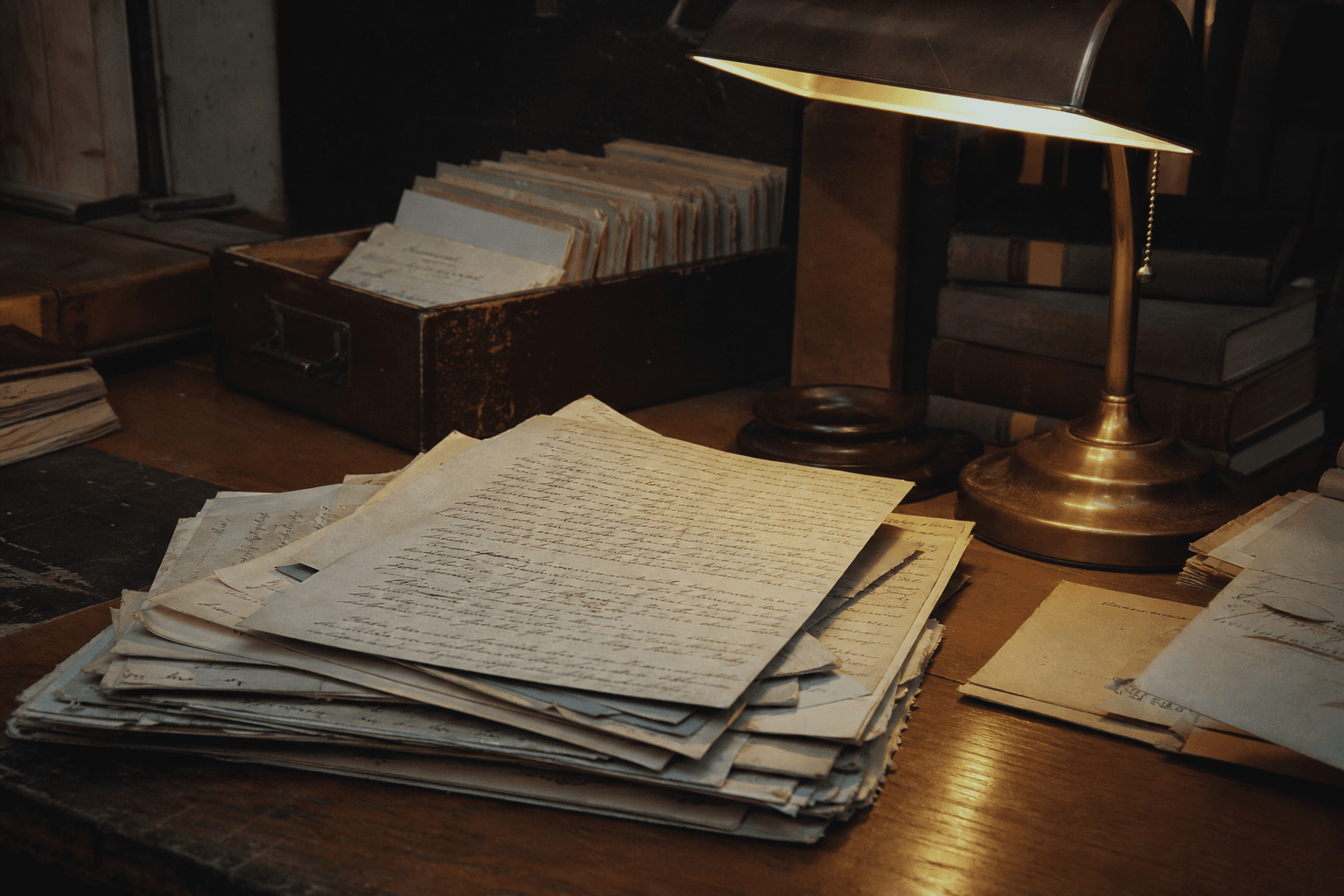
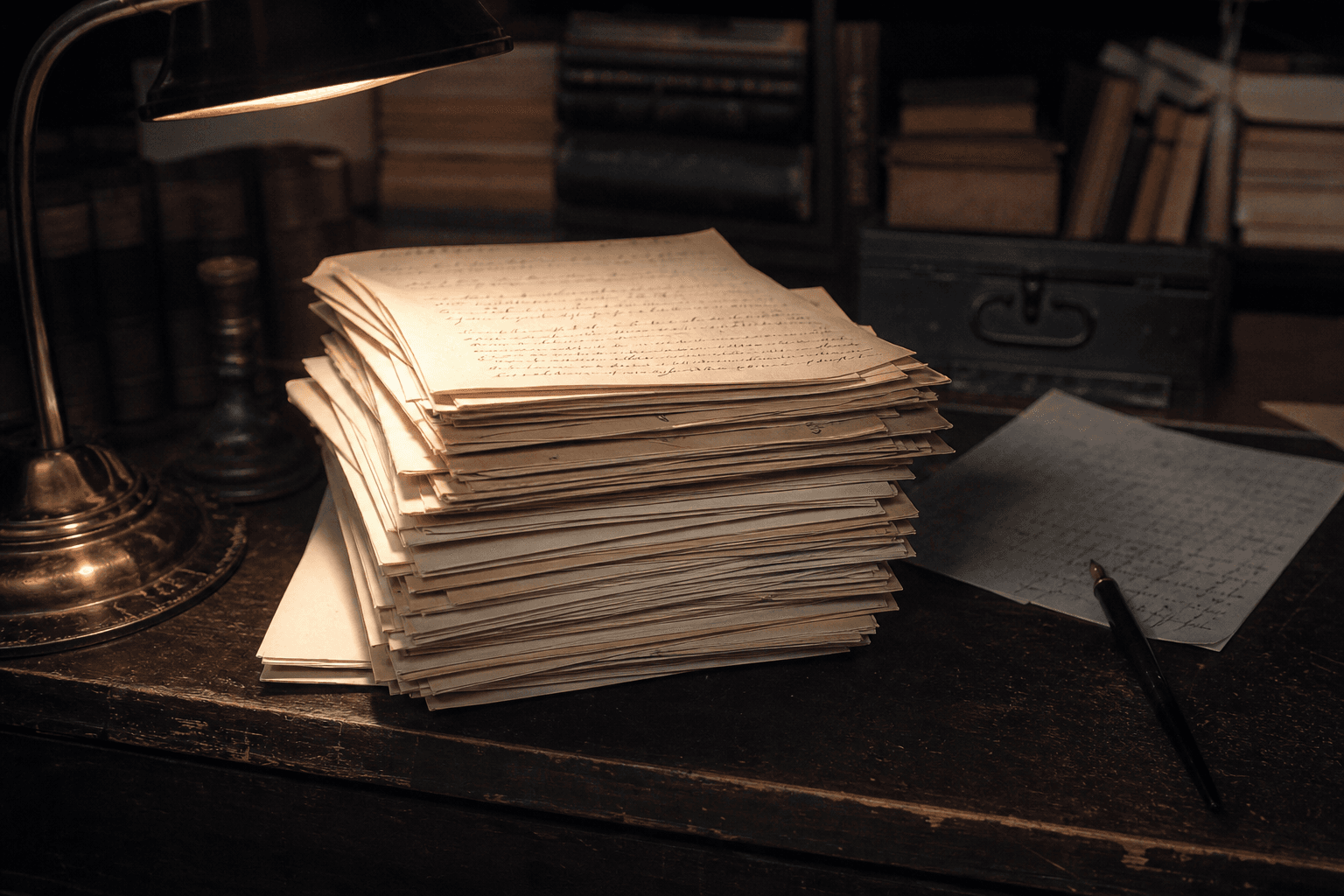
Lovecraft's letters form a second canon, and in some ways the larger one. Thousands survive, ranging from comic postcards and travel notes to long arguments about aesthetics, science, race, politics, food, architecture, amateur journalism, and the exact temperature of a sentence. A reader who studies only the fiction sees the finished mask; a reader who enters the correspondence hears the workshop, the prejudice, the generosity, the vanity, the fatigue, and the astonishing daily discipline. Lovecraft letters are not supplementary trivia. They are the field recordings behind the published weather.
The correspondence explains how stories were made. Lovecraft discusses atmosphere, pacing, revision, naming, and the management of impossible evidence. He advises younger writers, complains about markets, reports dreams, and tests philosophical claims that later appear as fictional pressure. Biography supplies the life events that often sit just off the edge of a page. When a letter circles Providence streets or New England travel, Arkham /archive/arkham, Dunwich /archive/dunwich, and Innsmouth /archive/innsmouth become less like arbitrary inventions and more like transmuted field notes.
Ethics, warmth, and cruelty in the same hand
The letters also force ethical clarity. Lovecraft's racism is not a rumor attached to the fiction by hostile modern readers; it appears in his own hand, sometimes casually and sometimes viciously. Honest study must keep that evidence visible. The value of the correspondence is not that it makes him more likable. It makes him more legible. Read Lovecraft's letters beside Religion & Materialism, Literary Circle, and Houellebecq on Lovecraft, and the portrait becomes more complex than either shrine or indictment.
The man who could write with real warmth to a friend could also write with cruelty about whole populations. The archive must preserve both signals without blending them into comfortable noise. For fiction cross-reading after the letters, try The Shadow over Innsmouth /archive/the-shadow-over-innsmouth with the correspondence open: the novella's social panic and the letters' prejudice are related instruments, not accidental neighbors.
Recommended editions
Editions, selections, and how to read without drowning
The surviving correspondence is too large for casual entry, so editions matter. S. T. Joshi and other scholars have made the corpus more navigable through selected volumes, annotated publications, and contextual apparatus. For most readers, Selected Letters is the sensible trailhead. It gives enough chronology to follow Lovecraft's development without requiring a total expedition through every postcard and amateur press exchange. Start with the years around major stories, then widen as needed. If The Call of Cthulhu /archive/the-call-of-cthulhu is under study, read letters around its composition. If At the Mountains of Madness /archive/at-the-mountains-of-madness is the target, track his scientific interests and publication frustrations.
Digital transcripts can be useful but should be handled cautiously. Provenance matters. A misdated or partial letter can distort a claim, especially when later critics use it to date a mythos idea, a political shift, or a quarrel within the circle. Best Lovecraft Book Editions is a practical companion here because it separates reliable fiction collections from attractive but less scholarly packaging. The Necronomicon Books Guide performs a similar service for false grimoires and collector temptations.
Reading method: clusters, not quarrying
Reading method matters as much as edition. Do not mine only for famous quotes. Follow clusters: Providence travel, astronomy, revision advice, amateur journalism, reactions to Robert E. Howard, arguments with August Derleth, notes to Clark Ashton Smith. Patterns emerge across repetition. Lovecraft's public theory in Supernatural Horror in Literature looks different when placed beside private complaints about editors or markets. His materialism looks different when tested against his hunger for ritual language.
The letters are best approached as a long coastline: map the harbors first, then walk the dangerous inlets with a notebook. When a letter mentions Yog-Sothoth /archive/yog-sothoth or the Necronomicon /archive/necronomicon, note whether the writer is joking, advising, or already half inside the fiction he is helping another author build. Finish with Complete Reading Order so correspondence dates and publication years stay aligned rather than drifting into fan chronology.
Recurring themes
Recurring themes: craft, science, place, and prejudice
Several themes recur so persistently in Lovecraft's correspondence that they become interpretive instruments. The first is craft. He insists again and again that atmosphere matters more than plot machinery, that a weird tale must manage suggestion, and that names, documents, and scholarly tone can make impossibility feel discovered rather than invented. These comments illuminate The Whisperer in Darkness /archive/the-whisperer-in-darkness, From Beyond /archive/from-beyond, and Pickman's Model /archive/pickmans-model, where testimony and perception do much of the terrifying labor.
The second theme is science. Lovecraft's atheism, astronomy, chemistry, geology, and fascination with deep time all feed the fiction's materialist dread. He did not need demons when scale could do the work. The ancient entities in At the Mountains of Madness /archive/at-the-mountains-of-madness become more powerful when read beside letters that treat humanity as a temporary biological accident. This is the bridge to Religion & Materialism: the fictional gods are not gods in a devotional sense, but names given by frightened minds to forces they cannot master.
Place, politics, and the New England notebook
The third theme is place, especially New England. Lovecraft's travel letters are full of streets, roofs, churchyards, weather, and historical texture. They help explain why Arkham, Massachusetts and Complete Reading Order often return readers to geography before plot. The fourth theme is prejudice, and it cannot be sealed away from the others. Racism, antisemitism, class fear, and xenophobia recur in ways that stain both personal record and fiction.
Modern Lovecraftian Horror often writes back to this inheritance directly. The letters give that response its evidence. They make admiration harder, but also more precise, which is the only admiration worth keeping in the field. When a letter praises a friend's story, ask what technique it is really praising. When a letter sneers at a neighborhood, ask what fiction later absorbed the sneer. Cross-link Arkham Massachusetts when travel notes become fictional towns on the map.
Correspondence as social life and mythos engine
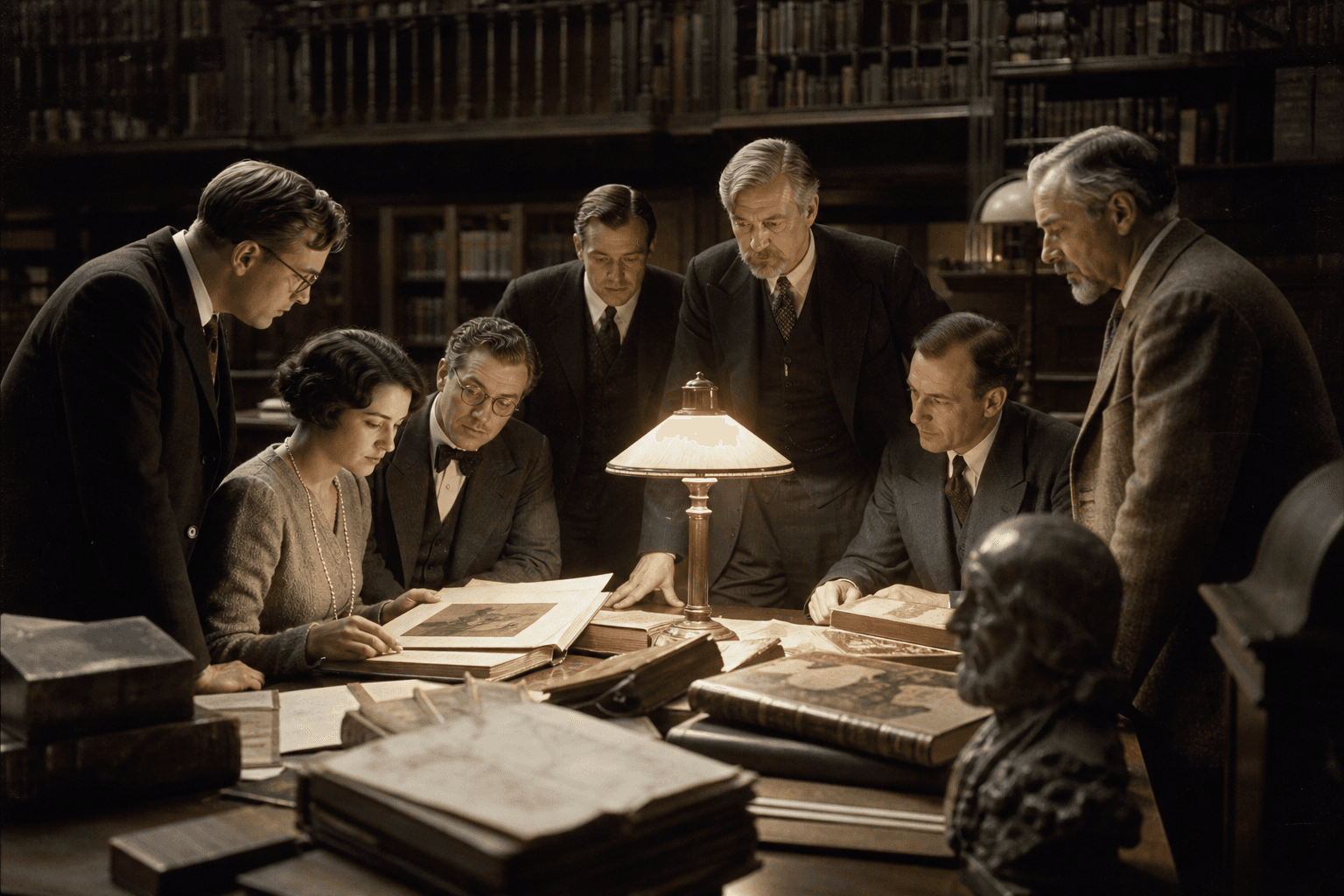
Lovecraft's social life was epistolary in the fullest sense. The mail did not merely supplement friendship; for long stretches, it was friendship's main body. Through correspondence he built the network now covered in Literary Circle: Robert E. Howard in Texas, Clark Ashton Smith in California, August Derleth in Wisconsin, Frank Belknap Long in New York, and many others. Ideas crossed the country in envelopes. Encouragement, mockery, drafts, private jokes, borrowed gods, and false books traveled with them. The Cthulhu Mythos was incubated in this traffic before later publishers gave it a name.
The letters also show Lovecraft as mentor and irritant. He could revise another writer's story with almost surgical attention, offer pages of advice, then turn around and pronounce sweeping judgments that reveal his arrogance and biases. That unevenness is part of the record. It helps explain how he inspired loyalty without becoming easy company. When Derleth later preserved and reshaped the canon, he was acting not as a distant editor but as someone formed by years of exchange.
Shared names, broken coherence
For readers tracking archive entries, correspondence clarifies why the Necronomicon /archive/necronomicon, Cthulhu /archive/cthulhu, Yog-Sothoth /archive/yog-sothoth, and Nyarlathotep /archive/nyarlathotep feel communal without becoming fully coherent. They moved through conversation as much as through publication. Selected Letters, Biography, and Literary Circle should therefore be treated as a single field packet.
The fiction may be the visible ruin, but the letters are the surveyor's marks on nearby stones, sometimes clear, sometimes misleading, always worth recording before the tide comes in. Finish with The Dunwich Horror /archive/the-dunwich-horror and ask which names in that story sound like private mail first and public myth second.
Evidence 01

Evidence 02
Dispatch LOVECRAFT_LETTERS · Primary keyword: lovecraft letters
Continue reading

Field Dispatch
H. P. Lovecraft - Biography
Howard Phillips Lovecraft's life: Providence, Weird Tales, marriage to Sonia Greene, literary friendships, and the worldview behind cosmic horror.
Read dispatch →
Field Dispatch
Lovecraft's Literary Circle & Influences
Edgar Allan Poe, Lord Dunsany, Clark Ashton Smith, Robert E. Howard, and August Derleth - how Lovecraft's circle shaped the mythos.
Read dispatch →